

Five Co-Op Questions with Joshua Addo
Northeastern’s co-op program provides students with months-long, professional work experiences and enables employers to tap into talented and innovative students who can help them meet their business objectives. Interested in hiring a co-op? The next cohort of co-ops will begin work in January 2026. Join the Roux’s Experiential Learning Team for a Tap Into Talent webinar on Wednesday, September 10, to learn how to hire a co-op.
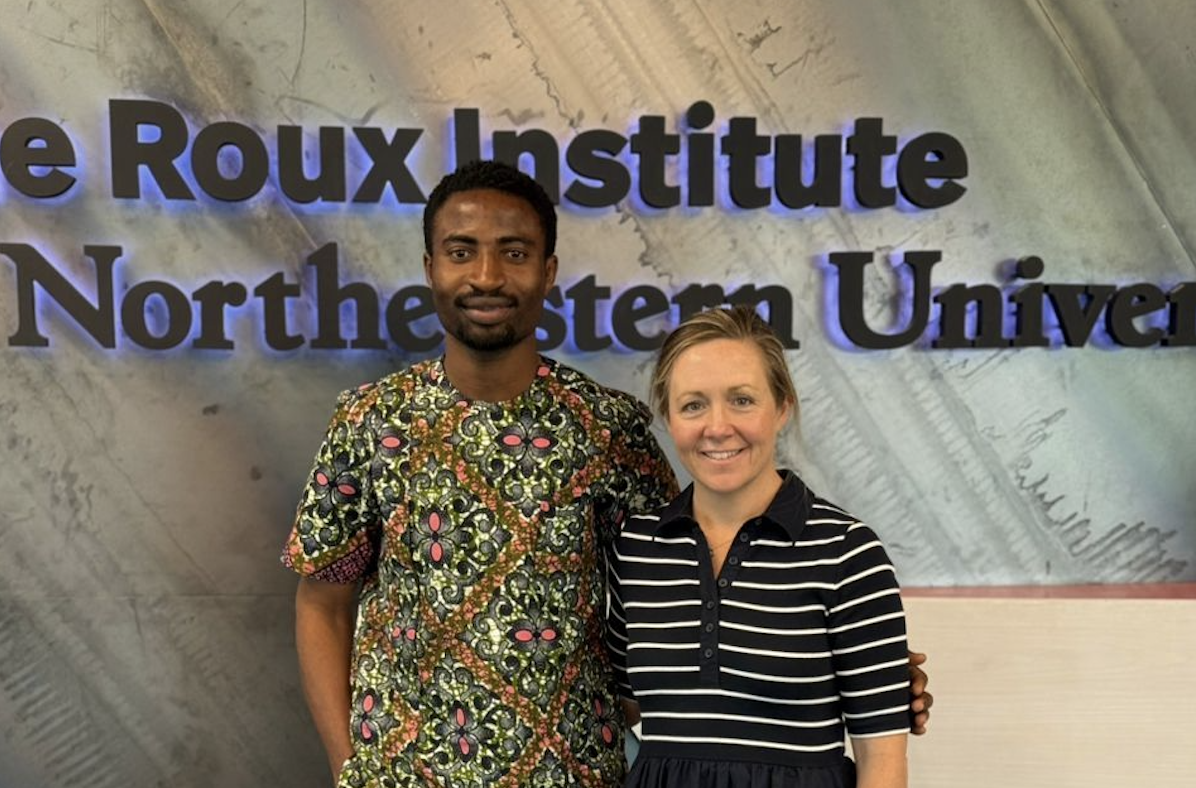
To learn more about the co-op experience, we connected with Joshua Addo, a Roux learner who is pursuing a master’s in analytics. He recently completed a co-op at Kind Mind, an edtech startup that helps schools address challenging behaviors and bullying with a program that teaches adults and children how to co-regulate, be kind, and feel ready to learn. Kind Mind’s evidence-based program currently impacts more than 4,000 children and families and 165 teachers across elementary schools, teaching colleges, and childcare facilities.
What inspired you to complete a co-op with Kind Mind?
During my national service [note: in Ghana, graduates of tertiary institutions complete a year of mandatory service, undertaking a broad range of roles, which include combatting hunger, illiteracy, disease, and unemployment] teaching financial accounting at a senior high school, I worked closely with a student who had struggled in her first year. With targeted support and steady practice, she completed senior high school with strong grades, entered university, and became one of the top students in accounting.
After her graduation, her parents called to thank me for the impact I had on her journey – it was a reminder that the right guidance can change a life, and, by extension, a community. When I saw Kind Mind’s mission to build calm, emotionally safe classrooms, I recognized that same ripple effect at scale. Pairing my analytics toolkit with a purpose-driven social and emotional learning (SEL) program felt like the natural next step.
Walk us through a day in your life on co-op.
On co-op I worked across data, product, project management, and go-to-market strategy. I analyzed student- and teacher-level SEL outcomes and built lightweight dashboards to help the team see impact and inform decisions. On the project management side, I kept pilot projects and reporting on track, and on the sales side I prospected childcare providers, set up discovery meetings, and translated what we heard from prospective customers into clear requirements.
I also managed Kind Mind’s social media accounts, planning content, tracking engagement, and sharing outcomes and stories from the field. In short, I sat at the intersection of data, users, and product, making sure what we built was both evidence-based and genuinely useful.
At Kind Mind, where I analyzed social and emotional learning data, coordinated discovery scheduling, supported project timelines, researched providers, and amplified outcomes on social channels, I realized I am strongest where data meets people. Going forward, I am aiming for roles that bridge analytics with the front line in education/SEL so that I can keep turning educator voices into evidence and evidence into clear decisions that help families, kids, and teachers.
Joshua Addo
Master's of Analytics Student, Northeastern University
What advice would you give to a student who’s about to go on co-op with a startup?
My advice would start with why: The experience I had helping a struggling student taught me that intentional guidance can change a life and a community. In a startup co-op, the same principle applies: don’t wait for perfect conditions; be the steady, intentional force that moves things forward.
Turn “not now” into “what can I do?” When the start date of my co-op was postponed, I didn’t go idle. I asked about volunteer opportunities and stayed engaged. That polite persistence kept up the momentum and opened the door later.
Lead with value, not uncertainty. Focus on completing brief, specific tasks that you can complete, like cleaning a dataset or creating a one pager. For a busy founder, specific deliverables reduce the barriers they face.
Stay mission-aligned and human. The same care that lifted one student should guide your co-op: communicate, follow through, and keep the mission at the center of every decision you make.
What was the most rewarding part of your co-op?
It was watching the whole chain connect. I researched prospective childcare providers, scheduled discovery calls, and got to see how Lee, Kind Mind’s founder, translated that feedback into product refinements. Seeing teachers later report calmer classrooms and then watching strengths and difficulties data reflect those shifts made the impact tangible.
It was equally rewarding to share these stories on Kind Mind’s social channels and hear educators echo back how kids were using breathing and affirmations. For me, the win was being the bridge; coordinating real-world input, visualizing outcomes, and helping the team keep pilot projects and reporting on track.
Did this co-op change how you think about your career?
Yes – this co-op clarified my path by knitting together my teaching, banking, and refereeing backgrounds into one lane: mission-driven impact analytics with strong coordination. Teaching gave me a classroom lens to translate data into useful insights for educators; banking trained my rigor with KPIs, documentation, and executive-ready reporting; and refereeing taught me calm, impartial decision-making under pressure.
At Kind Mind, where I analyzed SEL data, coordinated discovery scheduling, supported project timelines, researched providers, and amplified outcomes on social channels, I realized I am strongest where data meets people. Going forward, I am aiming for roles that bridge analytics with the front line in education/SEL so that I can keep turning educator voices into evidence and evidence into clear decisions that help families, kids, and teachers.