


Recent Roux Institute grad Evrard Ngabirano knows a thing or two about starting over
“It’s tough to restart life,” he says, reflecting on all he’s had to rebuild since he moved to the U.S. with his wife, Sandrine, and young son in 2018.
Born and raised in Burundi, Ngabirano earned his undergraduate degree in computer science at the University of Rwanda and was working in IT in Burundi when his family made the decision to leave everything they knew behind and settle in a new country, half a world away. His family did a brief stint in Maryland before moving to Maine, drawn here by its safe communities and proximity to the ocean. “I googled ‘safe places to live,’ and Maine popped up. So that’s where we moved,” Ngabirano says, laughing.
In Maine, the rebuilding process began. Ngabirano took the first job he could get, at a factory. He and his wife alternated day and night shifts so that someone was always home to care for their son — they weren’t yet able to secure a spot in a daycare. Determined to find a job in his field, Ngabirano continued to apply for IT jobs, but faced a predicament many immigrants experience: thousands of miles away from his home country, his education, experience, and globally recognized. certifications suddenly seemed moot, and he faced arbitrary rejections from even entry-level jobs in an industry he had over a decade of experience in.
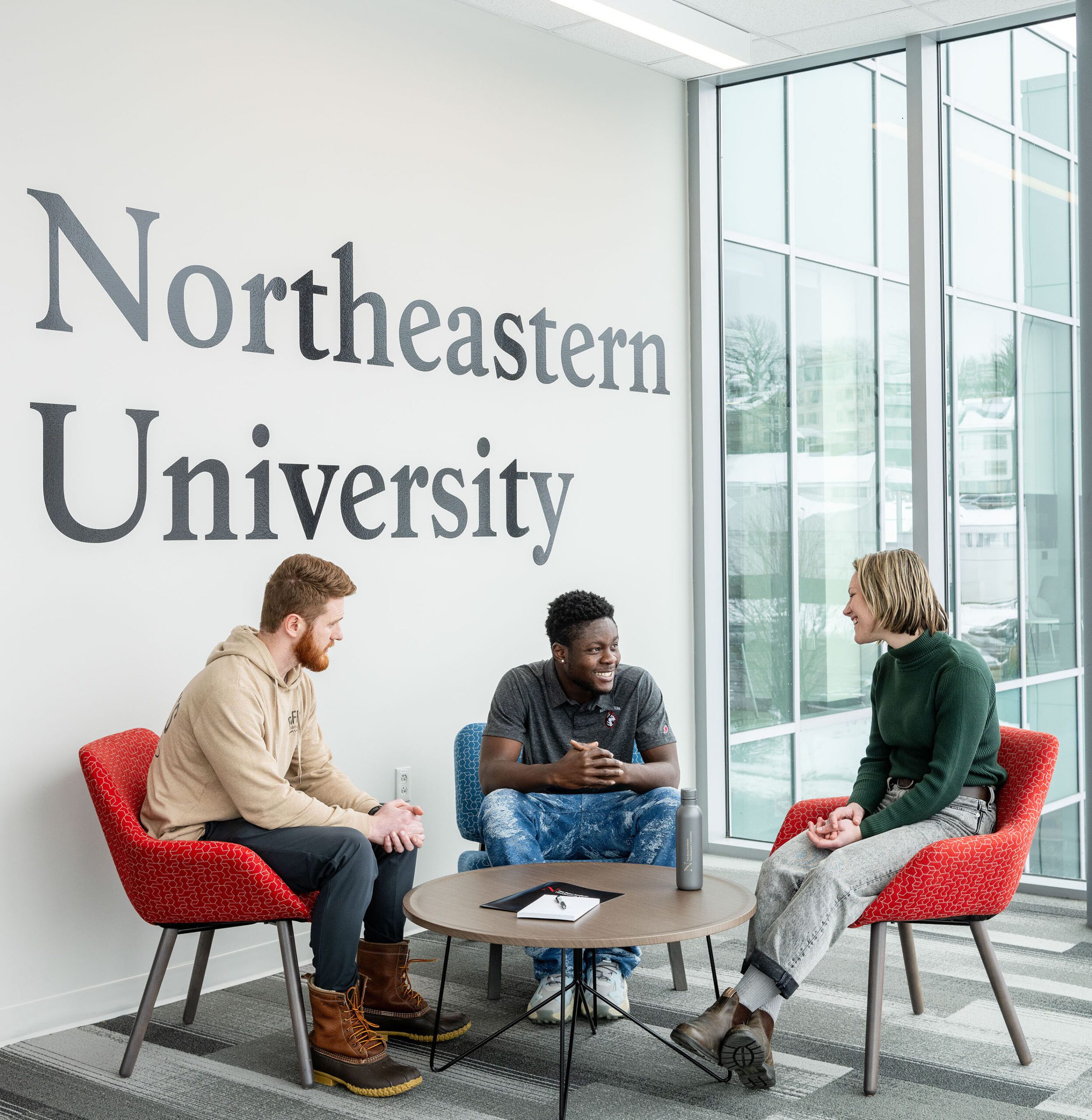
So he decided to go back to school. “I need to control what I can control,” he remembers thinking. “I can’t control who hires me, but I can control my academic background.” He’d always wanted to earn a master’s anyway, and, in such a period of rebuilding, it felt like the right time. Certain stressors had eased a bit. He and his wife were able to get their son into daycare, freeing up some bandwidth for Ngabirano. The Roux Institute at Northeastern University had recently opened its doors in Portland, and with its tech-forward reputation and curriculum, it felt like the perfect fit. He enrolled at the institute in the fall of 2021 to earn his master’s in computer science.
Ngabirano found going back to school a bit jarring at first. It had been ten years since he had been a student, and he wasn’t used to studying while working full time and raising a family. But he eventually found his footing and, with the support of his wife, was able to immerse himself in his studies and begin to enjoy his classes. “My wife earned 80% of this degree,” he says, describing how she took on the bulk of labor at home while he worked and studied. She gave birth to their second child, a daughter, during his time in the program.
Despite his extensive experience in IT, Ngabirano was able to take classes at the institute that were eye-opening and challenging. “IT is a changing world, so there is always new stuff to learn,” he says. With classes that ranged in topics from data science to programming to scalable systems, Ngabirano realized that he was gaining a truly holistic understanding of computer science that would help him make more informed decisions in his career in IT.
Shortly into his studies, Ngabirano landed his first IT job in Maine at Allagash Brewing Company. Today, he works as a data systems specialist at Ameresco, a renewable energy company with a location in Portland. He’s in charge of the IT infrastructure and deploys the knowledge he’s gained in his classes every day on the job.