

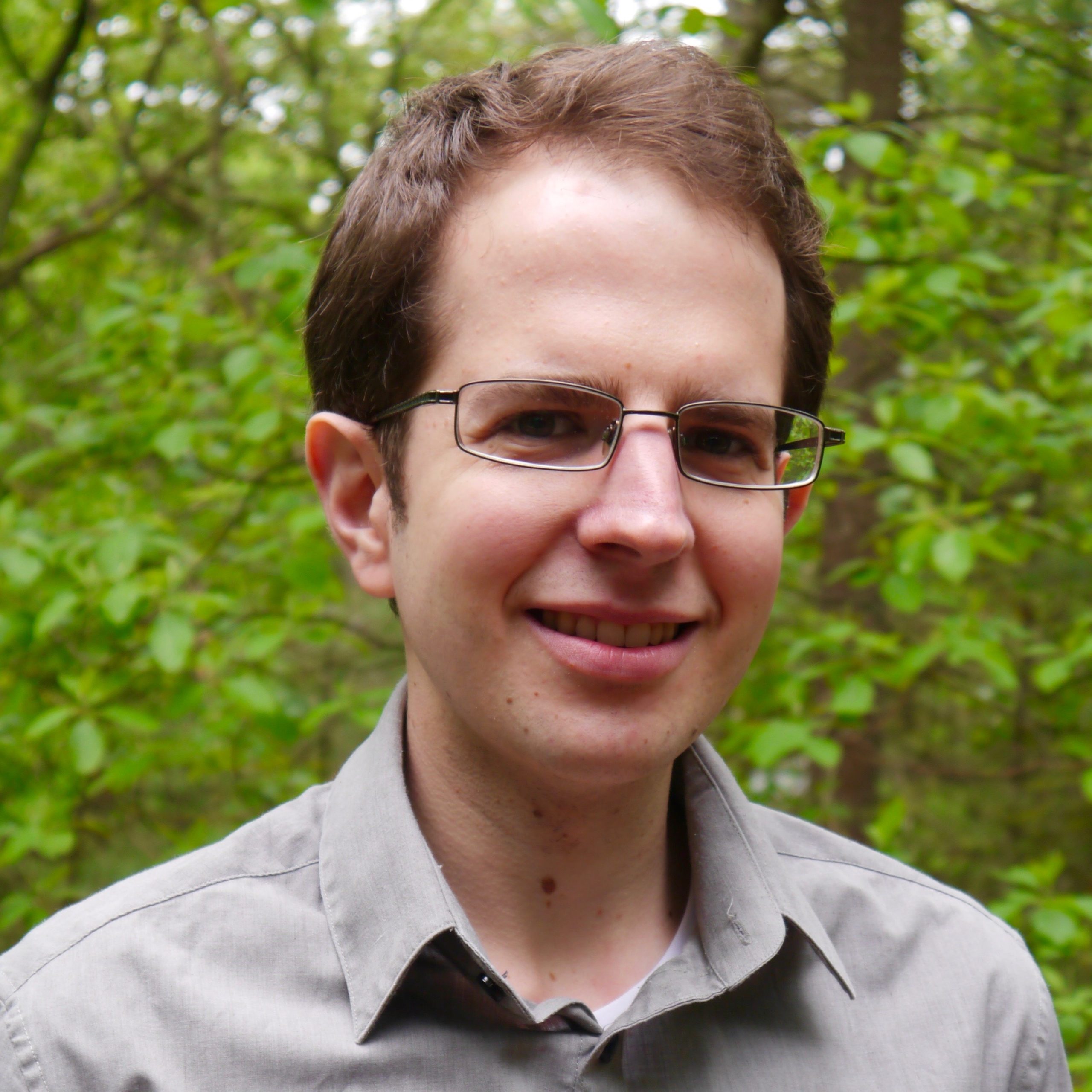
Roux learner spotlight series: meet Jacob Sagrans
Jacob Sagrans (he/him) is one of many graduate students balancing their coursework with a full-time job. He works as a Senior Research Associate with Science Education Solutions (SCIEDS), where he designs and implements data science and STEM education projects for middle school youth. He recently co-authored an article on this work titled “Data Science Meets Data Teaching,” which was just published in a National Science Teaching Association (NSTA) journal, The Science Teacher. He also works as a consultant for the Gulf of Maine Research Institute (GMRI), where he finds and curates data sets for the ‘Real World, Real Science’ project on climate change education. Before enrolling in the Master’s in Analytics program at the Roux Institute, he received a Ph.D. in Musicology from McGill University and a B.A. in Music from Grinnell College.
How did you first hear about the Roux Institute, and what drew you to apply?
I first heard of the Roux Institute from folks at the Gulf of Maine Research Institute, in the summer of 2020. I had been collaborating on a project with GMRI through the Data Clubs project for my work at Science Education Solutions. I thought it sounded like a great next step for me to go for a Master’s in Analytics and learn more about data and how to analyze it. Science Education Solutions has partnered not only with GMRI but also with schools in Maine such as Oxford Hills Middle School, Falmouth Middle School, and also the Maine School of Science and Math. So there was a Maine connection with my work, and I also have family in Maine. I decided, since I had been working mostly remotely, that I would move to Maine for both work and the Roux.
Can you tell us a little more about your work in data science education?
I work on several projects at Science Education Solutions. One I mentioned is called Data Clubs, where we have after school and summer camp programs that introduce middle school students to data science in a fun and accessible way. We use a great free digital tool called CODAP to help youth explore data. We have modules on topics such as ticks and Lyme disease, which kids in Maine have some personal experience with it. We have also worked on sports and leisure injuries, and also one called Teens, Tech, and Time looking at data on how people use technology and social media. I have also been involved with a project on data science education related to COVID-19 and pandemics.
What do you enjoy most about working with middle-school students? I imagine that lot of them are new to data science, so it must be an exciting thing for them to learn about.
It’s fun to introduce kids to something that’s new to them, that they haven’t seen before. And I think that middle school is a great level because they can really start delving into projects and looking at real-world data. The projects we work on are not as complex as the data sets with tens of thousands of cases that I have had in some of my Roux courses—more like data on the rates of Lyme disease in all 50 states over a few years. Middle-school students can handle that type of data, and they can use tools to start exploring it.
What classes are you currently taking at the Roux Institute, and how do those classes relate to your work and career interests?
I am currently taking ALY 6080 Integrated Experiential Learning, which is quite interesting and applying a lot of what I have learned so far to a complex business problem for a real organization. We are trying to define and figure out how the data will be used to further their mission, which is exciting. It’s very real-word – you have all this data and you have to figure out how to approach a business question with the data you have. It’s been exciting and challenging.
In the second half of winter term, I’m taking the ALY 6983 Analytics for Social Good elective. It’s a topic I care a lot about, since I work in education and have a public health angle for one of my work projects and a climate change focus for my GMRI consulting work. In the future, I see myself continuing in an analytics area related to social good, such as education, the environment, or public health. I also have an interest in sustainable/responsible planning and transportation, which could involve analytics too. But I’m still learning and might find something else that interests me too.
It’s fun to introduce kids to something that’s new to them, that they haven’t seen before. And I think that middle school is a great level because they can really start delving into projects and looking at real-world data.
Jacob Sagrans
M.S. in Analytics
What did you study during your undergraduate degree? Were you anticipating a career in data science?
I actually did an undergraduate and graduate degree in music, specifically classical music history and performance (voice and piano). But I’ve always been interested in research, teaching and learning, and the job opportunities in music history are limited. So I was looking to transition to something different, and I saw that Science Education Solutions had a Research Associate position, so I applied for it. That was about three years ago now. It’s been a great experience.
Out of curiosity, have you found ways to combine your work in data science and your background in music?
That’s an interesting question. When I was in graduate school studying music, there was a project I was involved in where researchers began to apply big data/data analysis techniques to analyzing large amounts of music held in online score libraries. I wasn’t involved much on the data or coding side of the project, but I found it very exciting. Maybe in the future I’ll think of ways to combine data science and music. I’ve recently been exploring data sonification, which I find quite intriguing. For example, I found a video from a man in Germany who sings the data on Coronavirus case graphs.
You recently moved to Maine from Massachusetts, specifically from the Boston area. How has that transition been? What are your favorite parts of living in Maine?
Because of the pandemic, in some ways it’s been a bit of a weird transition. But I really like Maine. I like being outdoors and activities like hiking, biking, running, cross country skiing, and skating. And there are definitely many opportunities for this where I’m based in Brunswick. I also like being part of the Roux community in person. It’s a smaller, close-knit community that’s different from what I had when I was in graduate school at McGill, in a much larger city with many more people. But like Montreal, we of course also have great food and breweries here in Maine (I am maybe a bit too fond of Flight Deck Brewing and its neighbor Wild Oats here in Brunswick than I should be for my health and my wallet!). I also love having the Brunswick farmer’s market and nearby farms to go to for fresh local food all year round.
Last question: do you have any book, podcast, or media recommendations related to data science?
I’ve been watching a lot of the Olympics recently, and data analytics could be applied to that (I’ve also been following the FiveThirtyEight Olympics predictions). I’d also recommend a book that I read before starting at the Roux, which came up in a class discussion on “ethical visualizations” in ALY6070 Communication and Visualization for Data Analytics: the book Data Feminism by Catherine D’Ignazio and Lauren Klein (2020). It’s a fascinating and important source for thinking about the social context of data and data analysis for the social good.