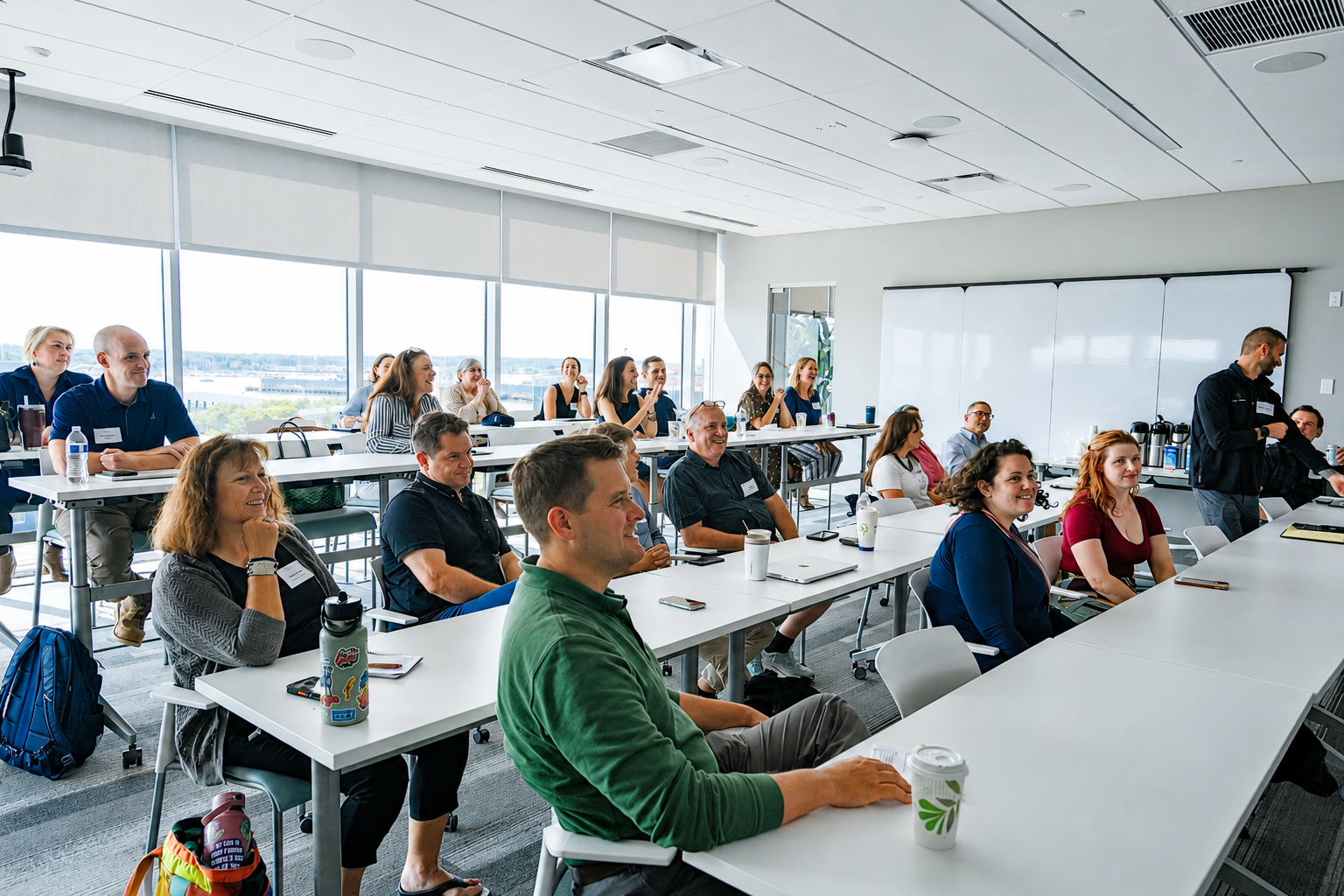
Generative AI results are based on a learner follow-up survey conducted two months after a Maximizing Productivity with Generative AI workshop.
Beyond training
Northeastern brings workforce learning, graduate talent, applied AI, and research together. As your needs develop, we can help move from capability building to governance, use-case development, prototyping, implementation, or custom research.




Explore a recommended learning sequence based on what you are trying to accomplish or who you need to prepare. Each pathway can be customized around your priorities, industry, tools, and workforce.
Equip leaders and decision-makers to make informed choices about AI investments, identify and assess valuable opportunities, and prepare prioritized initiatives for implementation.
Build practical AI capability across the workforce, moving employees from basic awareness and effective prompting to confident use of AI tools in everyday work.
Participants leave with practical methods, frameworks, and skills they can apply to real work.
Heather HodgeIT Helpdesk Supervisor, Bangor Savings Bank
Sarah RinesSenior Program Manager, MaineHealth
Shemika ShackelfordProcess Manager, Unum
Eileen RiveraHead of Global Total Rewards & Talent Acquisition, Biogen
Michael CatoSenior VP and CIO, Bowdoin College
Brittney TomaselloAVP, Senior Marketing Coordinator, Bangor Savings Bank
Maureen FlahertyChief Strategy Officer, Kennebunk Savings Bank
Ann LynchExecutive, BerryDunn
Swipe or scroll horizontally to see more comments.
Our programs are designed for direct application, live engagement, and organizational relevance. That means learners work with real scenarios, relevant tools, and guided practice that connects back to the work they do every day.
Many options introduce AI, data, and digital topics. Roux custom learning is designed to connect live instruction, customization, and practical application to the realities of your organization.
| What to compare | Northeastern Custom Learning | Self-paced online courses | Generalist training vendors | No training support provided |
|---|---|---|---|---|
| Customized to your organization | ✓Built around your goals, roles, and context | –Usually standardized | ◐Some tailoring | ◐Left to individuals to seek upskilling |
| Live expert faculty instruction | ✓Facilitated collaboration, discussion, coaching, and Q&A | –Typically solo learning | ◐Atypical | –Not applicable |
| Applied to real workflows | ✓Designed to change the way teams approach real challenges | –Often one-size-fits-all | ◐May not reflect your workflow | ◐Skills learned for generic application |
| Role-based learning paths | ✓Supports leaders, technical staff, business teams and end-users | ◐Some options exist | ◐May not reflect actual use cases | –Possible for self-motivated individuals |
| Broader AI readiness support | ✓Aligns with adoption and workforce goals | –Standalone learning | ◐Sometimes connected | –Not scalable |
AI readiness is not built through one-off courses or tool access alone. Organizations need shared understanding, practical application, and support structures that help teams use AI responsibly and effectively in their daily work.
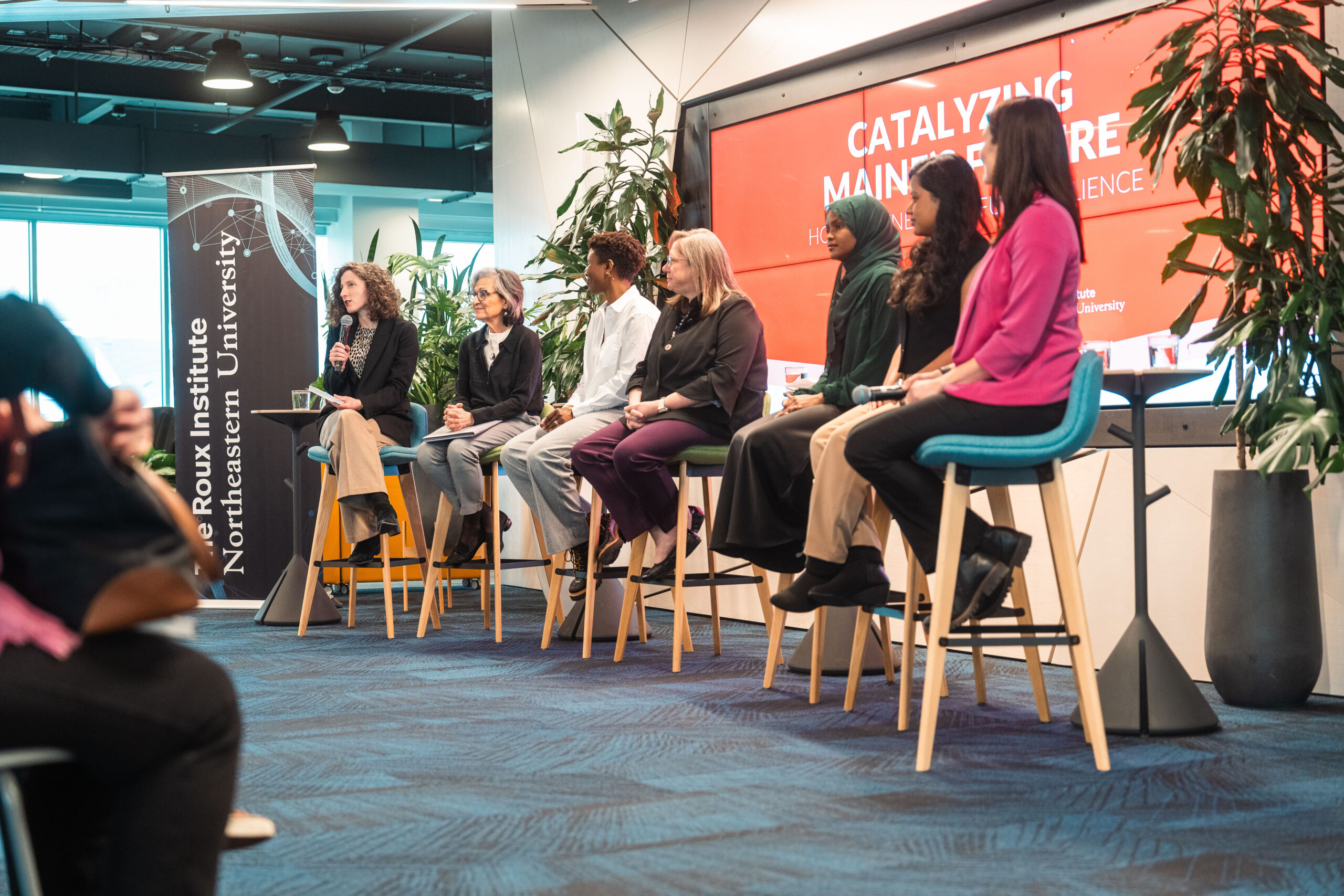
Courses can be customized for different levels, departments, and roles. Explore common starting points below, then download the full catalog for more options.
Our custom learning team uses practical frameworks to help organizations move from broad interest to clearer priorities, targeted upskilling, and measurable business value.
Exploring AI, data, or technology training for your organization? Connect with our team to discuss custom programs, role-based learning, and practical ways to help employees apply new skills in their work.
Our programs are shaped by Roux Institute practitioners working across AI adoption, data literacy, workforce transformation, responsible use, and practical implementation.
Organizations work with Northeastern to build shared AI understanding, strengthen role-specific capabilities, and connect learning to broader adoption and implementation efforts.
Custom learning connects AI concepts to the real decisions, tools, and workflows people encounter in their work.
Responsible AI is not only a policy conversation. It requires shared language, practical decision-making, governance structures, and role-specific training for the people building, buying, managing, and using AI systems.
Responsible AI education can be delivered as stand-alone training or paired with broader AI strategy, governance, workforce development, or applied AI initiatives.